

Create or edit a template
1
Open the editor
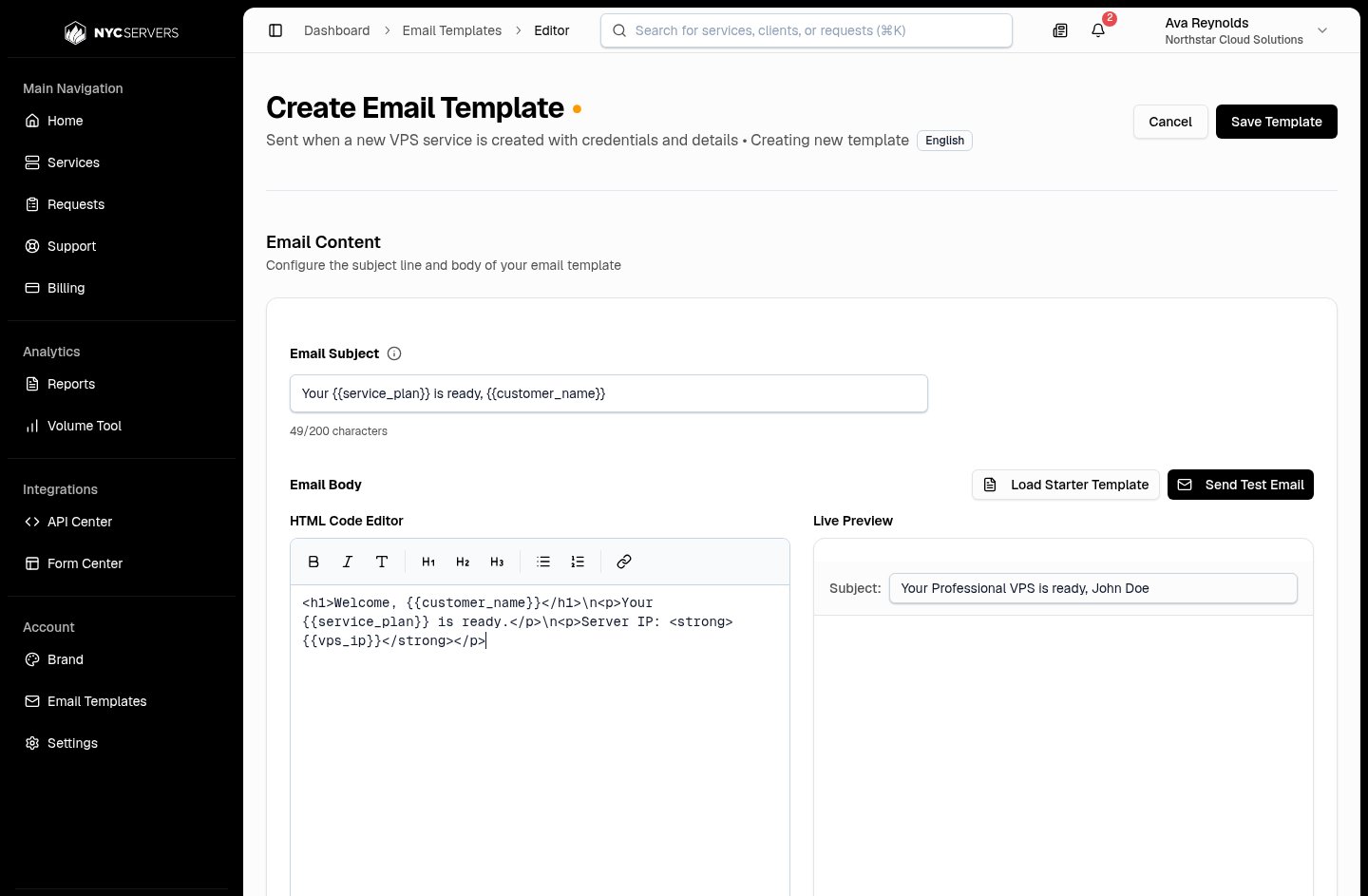
Select a value in Template Language, find the template type, and select Create. For an existing Custom template, select Manage > Edit.
2
Write the subject and body
Enter the subject in Email Subject (200 characters maximum) and the message HTML in Email Body. The HTML Code Editor toolbar adds bold text, italic text, paragraphs, headings, lists, and links.Load Starter Template loads a subject and HTML for the selected type. It replaces the current content and asks for confirmation when content already exists.
3
Add variables
Open Available Variables, select the copy control for a variable, and paste it into the subject or HTML. See supported variables.
4
Preview and test
Live Preview updates as you type, using sample values for the template type and your broker company name for
{{company_name}}. It never uses live client data, removes unsafe browser content, and can differ from the final result in an email client.Select Send Test Email to send the current subject and HTML to the signed-in admin’s account email. You do not need to save first, and the test subject includes a test label. Manage > Send Test Email in the list tests the saved version instead.5
Save
Select Save Template. A successful save stores and activates the template; it does not send a message.
Supported variables
Variables use double braces, such as{{customer_name}}. Keep the spelling and underscores unchanged. The panel replaces supported variables when it builds a preview or message, and leaves an unsupported name unchanged.
Available to every template type
Available to every template type
{{customer_name}}, {{service_plan}}, {{company_name}}, {{vps_ip}}VPS Welcome Email
VPS Welcome Email
Client and server details:
{{customer_email}}, {{vps_username}}, {{vps_password}}, {{cpu}}, {{ram}}, {{storage}}, {{os}}, {{location}}VPS Follow-Up Email
VPS Follow-Up Email
{{customer_email}}, {{days_since_setup}}Cancellation Warning
Cancellation Warning
Dates and reason:
{{warning_date}}, {{cancellation_date}}, {{warning_reason}}Cancellation Confirmation
Cancellation Confirmation
Date:
{{cancellation_date}}Reasons: {{cancellation_reason}}, {{cancellation_reason_nonpayment}}, {{cancellation_reason_volume}}, {{cancellation_reason_balance}}Safety rules
- Use only variables from Available Variables.
- Review every link and all text that a starter template adds.
- Use Send Test Email before you depend on a new layout.
Template list and errors
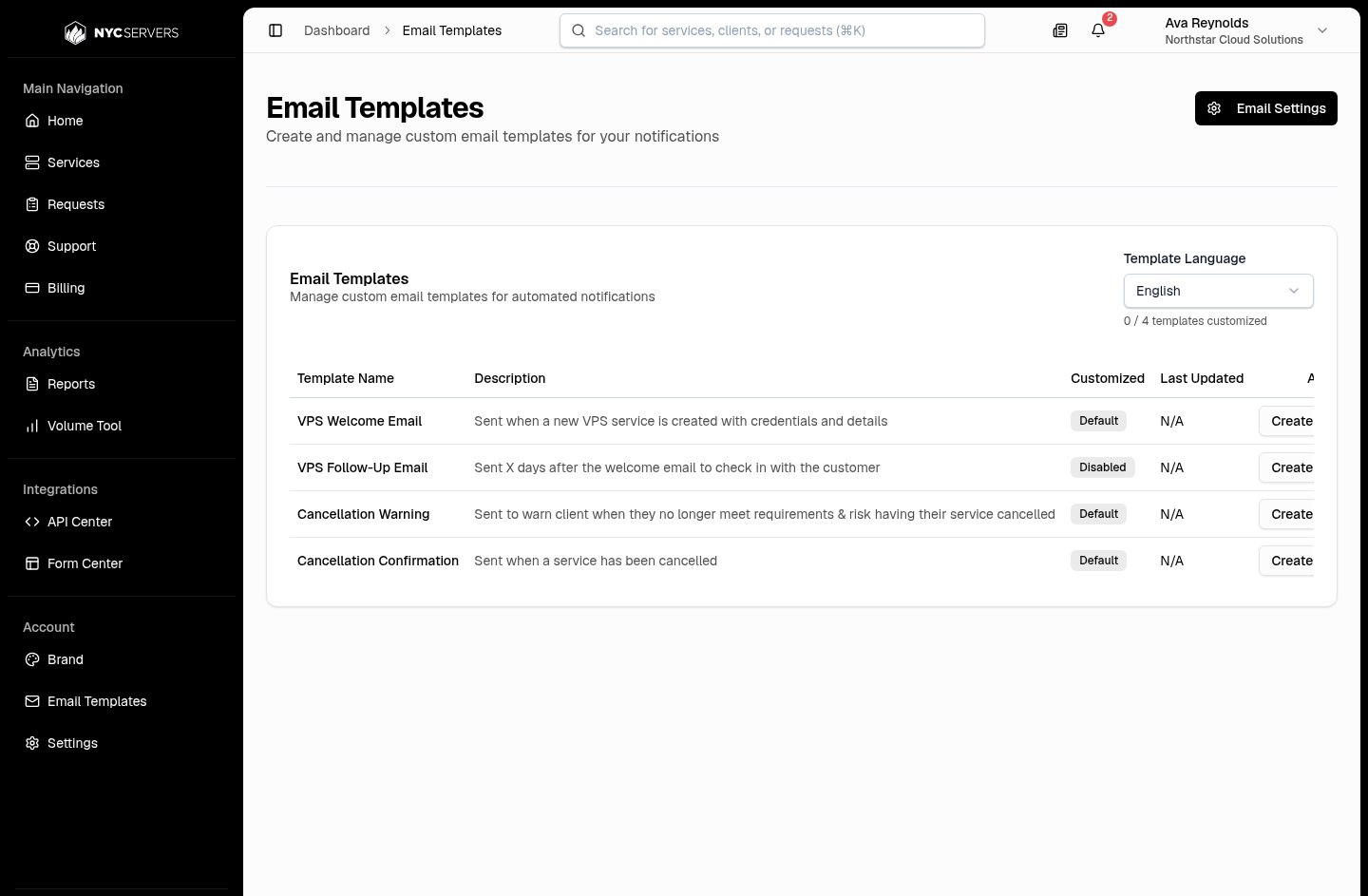
- VPS Welcome Email: Credentials and details for a new service.
- VPS Follow-Up Email: A follow-up after the welcome email, using your configured delay.
- Cancellation Warning: A warning that the service is at risk of cancellation.
- Cancellation Confirmation: Confirmation when a service is cancelled.
Save errors
Save errors